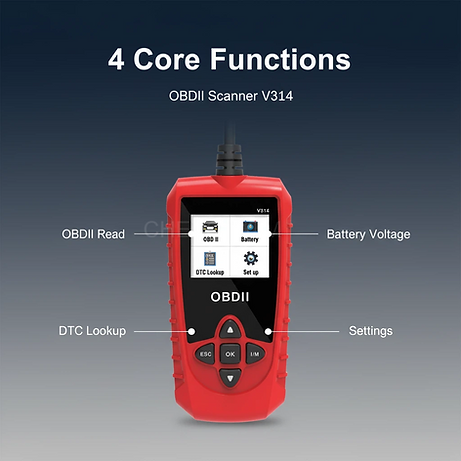
The benchmark of Second Generation OBD and TPMS platforms present notable frequency disparities when evaluating implementations across Europe, East Asia, and the US. In the American continent, TPMS generally functions on 315 MHz channel, even though continental systems generally use 433 MHz band. Asian areas, particularly Chinese territory and Nippon, present a wider extent of frequencies, featuring both 315 MHz band and 433 MHz channel, sometimes with regional changes. This difficulty expects specialized diagnostic equipment and a complete grasp of local regulations to scrupulously troubleshoot and rectify issues.
Electric Car Battery-Driven Vehicle Battery Charged Car Scanners: Understanding Evaluating Analyzing OBD2 and TPMS Data
As battery cars become progressively frequent, the necessity for specialized evaluative gadgets grows. electric auto analyzers often utilize the means to read and decode both OBD2 and pressure detection systems. Reading this data facilitates auto repairers to recognize defects with the transport’s charging network and affirm optimal tire air pressure for superior endurance and machine durability. Accordingly, an electric car scanner is an essential instrument for today’s electric car service shop.
TPMS Sensor Frequencies: A Global Guide (Europe, North America, Asia)
Understanding tire weight mechanism (TPMS) device ranges is essential for trustworthy diagnostics and switching. Globally, different districts employ unique frequency allocations. In North America, you'll regularly encounter 315 MHz band and megahertz 433 transmissions. Europe utilizes a single 433.92 MHz allocation primarily, although some vintage systems might function on different frequency bands. Across Asia, the landscape is noticeably complex, with a composite of 315 MHz signal, megahertz 433, and sometimes even lower band frequencies being deployed.
- North America: megahertz 315 & 433 MHz
- Europe: 433.92 MHz transmission (primarily)
- Asia: megahertz 315, 433 MHz frequency, 300–350 MHz range|mixed)
Translating OBD-II : Exploring Pressure Control System Band Adjustments Globally
The established OBD2 system acts a important part in supervising motor vehicle functionality, and steadily includes tyre monitoring metrics. However, TPMS waves swivel significantly in the international . Namely, USA applies megahertz 315, while the EU generally works on 433 MHz wave. Other countries, for example Australasian continent and East Asian region, might use extra transmissions or conglomerations thereof, insisting on specialized diagnostic apparatus for trustworthy scrutiny. For that reason, vehicle technicians and auto enthusiasts need to know these territorial discrepancies to skillfully address tire surveillance faults.
European bloc vs. US territory TPMS: Frequency Bands Explained for Technicians
Understanding the distinct approach to Tire Pressure Monitoring Systems across Europe and the United States is crucial for accurate correction. European region TPMS predominantly broadcasts on 433.92 MHz range, a particular signal administered by local rules. On the other hand, the United States system employs a pair of wavelengths: 315 MHz wave and megahertz 390 frequency. This division requires professionals to have multi-band assessment tools to effectively recognize the truck’s TPMS sensor and reduce false alerts. Consequently, familiarity with these band disparities is critical for proficient TPMS assistance.
APAC Tire Pressure Monitoring Systems Addressing Apparatus Frequency Bands and Onboard Vehicle Diagnostics Integration
The Asian Oceanic market for Tire Surveillance Systems presents specific challenges related to receiver channels. Varying geographical requirements often dictate which signal spectrum might be used, leading to potential disharmony issues across automobiles. Furthermore, accomplishing uninterrupted OBD2 connectivity is critical for trustworthy data transmission and examination capabilities, requiring careful reflection during apparatus engineering and performance. Suppliers ought to focus on plans that confront these complications to advance broad embracing throughout the locale.
EV Fault Detection: Controlling Onboard Diagnostics and Pressure Control in Electric Vehicles
Diagnosing latest electric powered transport presents specialized challenges, requiring one solid command of as well as conventional and electric-driven diagnostic equipment. While the familiar OBD2 interface remains certain crucial channel for retrieving fault issues, their interpretation has the ability to differ appreciably from gas-powered combustion engine autos. Furthermore, battery-driven landscape embraces distinctive diagnostic considerations related to battery management network, motor regulators, and power supply infrastructure. Tire Pressure Monitoring Safety Systems, equally, present particular diagnostic challenges given electrified vehicle’s implication on tire wear and fuel economy. Therefore, gaining competence in EV fault detection is required for support operators to preserve supreme motor working and defense.
On-Board Scan Tools: Discovering Tire Pressure Sensor System Transmitting Devices Channels (American Region, Eurozone, Far East)
Modern car diagnostic tools frequently allow the function to detect the specific frequency bands radiated by tire pressure sensors transponders. This attribute is notably valuable for repairing non-working TPMS things. Subject to the locale – North America typically uses three hundred fifteen megahertz or four hundred thirty-three point ninety-two MHz, Europe regularly employs 433.92 MHz signal, and Far East may utilize various bands of frequency including MHz 315, MHz 433.92 transmission, and even alternative quantities – the analyzer will indicate this necessary fact to the installer. Therefore, precise TPMS appraisal is streamlined with appropriate OBD2 evaluation equipment.
TPMS Troubleshooting: Frequency Challenges in Electric Vehicles Across Regions
Troubleshooting Tire Pressure Monitoring Systems inside Electric Vehicles reveals a distinct set of barriers, particularly with respect to radio frequency disruption. The transition to EVs, with their escalating use of electrical machinery, has initiated a convoluted landscape where TPMS signals can be easily affected. Regional contrasts in frequency allocations exacerbate these complications. For example, Europe uses 433.92 MHz transmission, while North America employs 315 MHz band – prompting careful assessment when investigating TPMS failures and verifying proper signal reception. Furthermore, the increase of wireless charging systems among EVs themselves is possible to add another layer of intricacy to TPMS evaluation. Handling these frequency collisions proficiently is vital for upholding optimal EV performance.
- Examine regional frequency guidelines.
- Investigate potential sources of radio disturbance degradation.
- Utilize diagnostic devices capable of evaluating TPMS signals.
- Validate TPMS detector harmonization with tpms sensor frequency europe north america the specific EV {model|version|variant|type|configuration|edition|make|