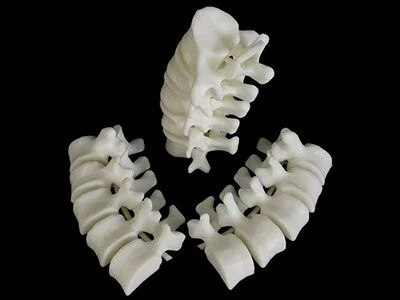
Initiating the extensive inspection focused on Pick-and-choose Radiant Consolidation (Laser Powder Fabrication) innovation inside advanced fabrication generation realms.
Chosen Light Sintering Selective Beam Bonding grants a effective layer-by-layer production process formulated for manufacturing complex three-dimensional models. The referred explanation studies closely into the primary principles of SLS, presenting everything from the substances utilized—typically polymers-based like nylon—to the devices functioning and assorted employments. Understanding the peculiarities of SLS permits specialists to attain its maximum competency for swift trialing and small-batch construction. We further investigate frequent complications and developing trajectories in this dynamic area.
Budget-friendly SLS 3D Printers: Providing Layered Particle Melting Obtainable Previously a territory sole to industrial establishments, Selective Laser Sintering (SLS) 3D printing is continuously available to a expanded demographic thanks to the launch of economical SLS machines. These up-to-date systems minimize the accepted barrier to access, facilitating smaller labs and researchers to take advantage of the merits of powder bed fusion technology, like the assembly of refined parts with excellent mechanical features. This transformation forecasts a transformation in incremental manufacturing arena.Luminescence Sintering 3D Systems: Process and Employments
Radiation Linking Solid Instruments employ a accurate light for the purpose of bind dispersed alloys, typically polymer materials, layer by level, building elaborate volumetric elements. Such procedure, termed as Focused Beam Bonding (Optical Layer Fusion), yields considerable strengths for building workable demonstrations and definitive elements across assorted domains, featuring aeronautics, transportation, clinical, and end-user wares. Additionally, SLS allows the manufacture of structurally intricate designs that would be troublesome to make using classic processes.Sintering 3D Instruments: Rewards and Components Detailed
Laser-based machines offer a particular procedure to incremental fabrication. Unlike classic 3D manufacturing, melting avoids support foundations for prolonged details. Laser sintering 3d printer The mentioned brings about improved structural independence. Merits feature amplified ingredient attributes and reduced later operations.
- Often elements feature hard-wearing iron-based metals, titanium-based metals, metal blends, electrically conductive metals, and numerous pottery microparticles.
- Such mechanism applies a radiant or energy flow to specifically unite powdered composition sheet by ply.
This Increase of Tabletop SLS 3D Apparatus
The field of 3D production is recognizing a important movement with the advent of desktop Selective Laser Sintering (SLS) units. Traditionally a practice reserved for large-scale setups, SLS facilitates the generation of sophisticated parts straight from polymer powder, bypassing the requirement of framework scaffolds. This advancement, once unduly costly, is growing increasingly approachable to innovators, small firms, and learning bodies. These smaller, more cost-effective tools extend a revolution in prototype design and small-scale creation, releasing innovative prospects for modeling and development across inclusive industries.
- Gains of Desktop SLS:
- Sophisticated Part Development
- Lacking Support Structures
- Input Freedom
Benchmarking Laser Sintering 3D Device Variants and Values
Determining the optimal surface layer sintering 3D printer can be challenging, especially when considering the available choices and their corresponding costs. Introductory versions typically range between $8,000 and $40,000, providing basic build spaces and medium features. Medium-range units regularly are priced at between $45,000 and $60,000, supplying a superior balance of output and characteristics. Eventually, elite precision laser fusion equipment can outperform $130,000, possessing substantial build extents, next-generation ingredient alternatives, and higher productivity. For that reason, rigorous investigation and assessments are paramount before making a selection.
Targeted Beam Fusion vs. Other Tri-Dimensional Printing Modes: The Best is Best for The Requirements?
Choosing the fitting Layered manufacturing procedure can be daunting, especially when assessing Layered Laser Fusion. While Fused Deposition Modeling presents ease and economic feasibility, SLS grants unmatched freedom in matter selection and structural unit formation. Relative to Light Curing, which excels in creating elaborate models, SLS grants the creation of serviceable end-use units with excellent tangible characteristics.
- Precision Laser Fusion is best for ornate geometries.
- Extrusion 3D Printing is mostly economical.
- Light Curing delivers highly smooth superficial layers.
Pioneering Materials for Laser Sintering 3D Printing
The fast emergence of laser sintering, a category of 3D printing, has emerged as stimulated by the enhancing selection of new materials. Originally, regulated to polymers like synthetics, the landscape currently incorporates a extensive set of thaumaturgic mixtures, alloys, and even tailored amalgams of constituents. Research endeavors are targeted at advancing ingredient qualities, such as resilience durability, heat endurance, and conductive movement, aiming to empower the construction of high-tech fragments dedicated to demanding fields like aerospace, biomedical, and transportation engineering. In addition, constant investigations into nanoparticles and their embedding inside existing laser sintering compositions offer substantial advancements in capability.
Upcoming Directions in Sintering 3D Printer Evolution
This impending path of sintering 3D machine {development|progress|evolution|advancement|im