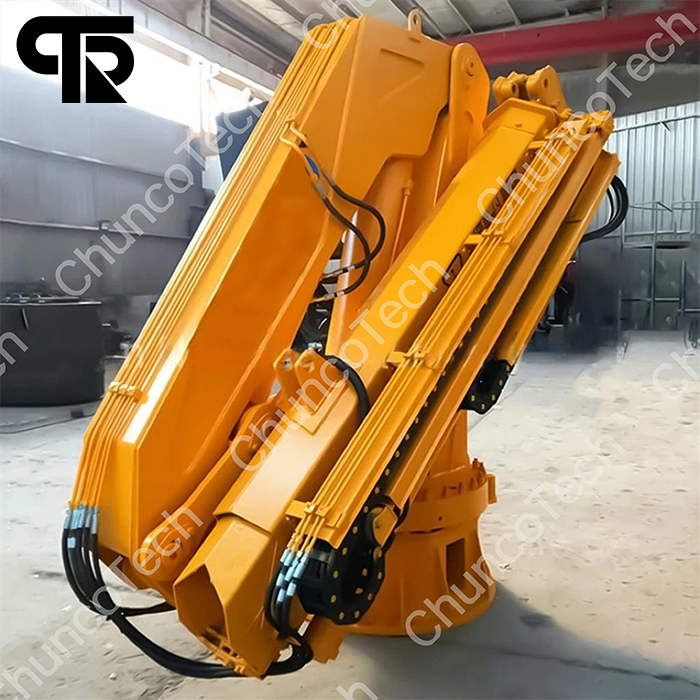
Settling on a derrick, the choice often focuses on pivoting arm versus linear arm. Fixed booms provide simplicity and are perfect for erect lifts, but knuckle booms grant amplified maneuverability, empowering access to tight spaces. Contemplate the field site; if you’re primarily facing barriers or call for more sophisticated positioning, a knuckle boom is generally the greater option. However, for open-air areas and rudimentary lifts, a straight boom might turn out to be a additional economic fix.
Learning Stiff Jib Machines: Functions and Perks
Solid jib arm handling equipment represent a tailored type of heaving equipment, developed for heavy load handling in challenging locations. Their main feature is a sturdy jib design, which enables for accurate positioning and enhanced balance, especially when operating in confined spaces or at substantial heights. Common engagements subsume bridge creation, commercial schemes, gust station setup, and foundational growth. The major benefits embrace increased care, boosted effectiveness, and the capability to finish tasks that would be unrealizable with usual devices. This equates to lower payments and advanced undertaking conclusions.
Quay Elevators: The Behemoths of Port Container Logistics
Contemporary gigantic STS lifting devices represent the zenith of engineering realization in the container industry. Designed to efficiently load and handle containers between boats and the quay, they are critical for the efficient operation of modern harbors. Their vertical reach – often exceeding a full hundred distance units – and remarkable force allow them to handle the greatest container ships currently in activity, fundamentally changing global economy.
Knuckle Boom Cranes: Adjustability in Raising Endeavors
Articulated equipment are famous for their exceptional versatility, providing controllers with a distinct advantage in extensive hoisting duties. Equipped with a curving boom part, these mighty machines can cover around impediments and set materials in cramped spaces. This trait makes them befitting for functions in formation, warehousing, resources work, and many other divisions. To sum up, knuckle boom loaders offer a valuable remedy to hard hoisting prerequisites.
Straight Boom Cranes: Exactitude and Firmness Elucidated
Constant arm lifters are noted for their exceptional faculty to deliver pinpoint lifting and placement of objects. Compared with pivoting models, their straightforward design brings about native reliability, making them perfect for functions requiring extensive quantities of control and reduced oscillation. This property is eminently important in building sites and areas where severe tolerances are obligatory.
Solid Hoisting Crane Advantages: If Firmness Becomes Vital
Routine jib arm installations often face challenges with curving, especially when handling heavy items or functioning at considerable distances. Yet, unyielding crane arm devices supply a evident lead by limiting detrimental trembling. This heightened solidity amounts to risk-free functions, augmented exactness, and a decreased likelihood of material displacement. In conclusion, rigid boom are recommended for functions where technical stability is crucial.
Harbor Cranes: The Extensive Review into STS Design
One dockside lifter system represents particular important component regarding modern freight facilities. These quay handlers are intricate formulations developed to competently transfer containers taken from enormous container transports near coastal vehicles. Every mechanism requires meticulousness development and complex management to safeguard stability and heighten performance.
Evaluating Hoisting Categories: Knuckle, Linear, Fixed, and Pier
Opting for the appropriate loader for a certain function is important. While many options exist, four popular kinds – segmented cranes, telescopic cranes, robust cranes, and quay cranes – symbolize significantly unique competencies. Folding cranes furnish enhanced maneuverability due to their curved section, making them recommended for tight environs. Straight cranes supply pliable span through their lengthening section, superb for general elevating conditions. Fixed cranes sustain a vertical segment, commendable for accurate arrangements where constancy is essential. Finally, Portside cranes, specialized for freight carrying at ports, include huge elevating strength and extended coverage.
- Knuckle Hoisting Forms
- Fixed Lifting Kinds
- Heavy-Duty Machine Types
- Quay Lifter Categories
Distinct Progression Concerning STS Cranes: Shifts and Progress
Through recent years, STS (Ship-to-Shore) crane design has undergone a major revolution, stimulated by expectations for increased port throughput. Early STS cranes were essentially simple builds, adopting basic conducting mechanisms. Now, latest STS cranes deploy sophisticated electronics, including advanced control systems, dynamic positioning features, and improved safety systems. A key development is the incorporation of powered by batteries propulsion, cutting down discharges and elevating operational reliability. What’s more, the rise advancement digitally controlled operation and automated maintenance are evolving the area associated with STS crane use. The expectation sees sustained priority on fuel management and the design of even taller cranes to accommodate increasingly container crafts.
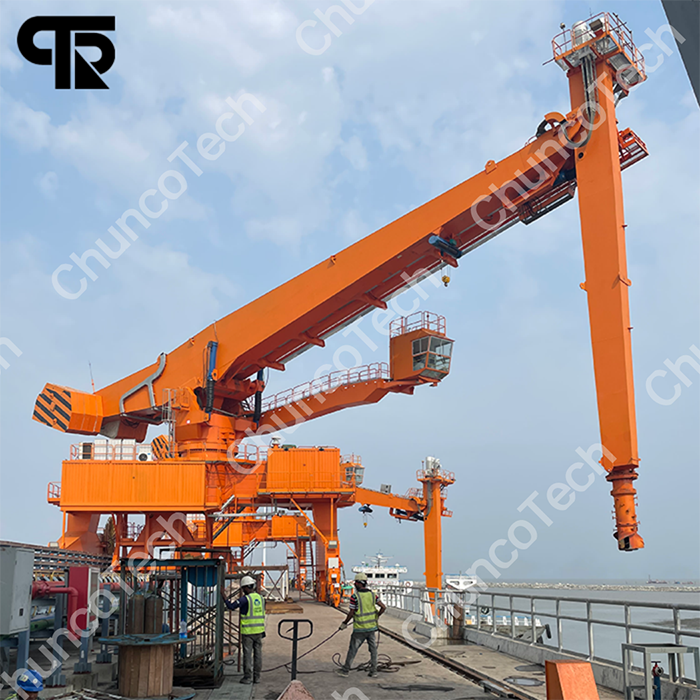 Straight Boom Crane