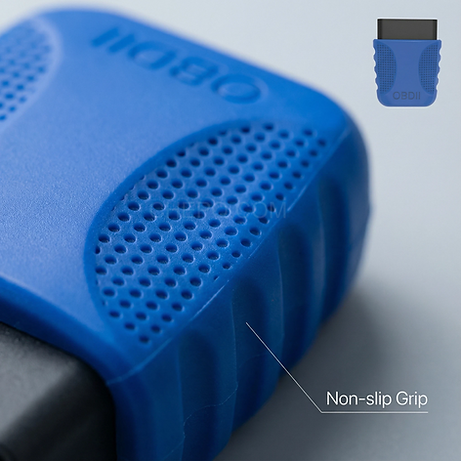
Appreciating OBD2 as well as Pressure Trackers bands proves to be key for operators and followers similarly. Throughout the European region, automotive diagnostics most often utilizes a usual automotive communication standard set of rules, encompassing variegated connectivity signals as determined by a manufacturer. Tire Sensors in the EU generally works on three-one-five MHz, although specific differences exist. The Asian continent presents an complex landscape, with myriad nations applying diverse car diagnostics protocols and Pressure Sensing Networks bands, typically falling between three fifteen and four hundred thirty three MHz, but with particular setups operating on nonstandard waves. Such U.S. mostly adheres to particular automated protocol and CAN protocol On-Board Diagnostics standards, while TPMS widely transmits on 315 MHz, although certain advanced automotive units can utilize augmented channels for better output. Make sure to check the motor vehicle's guide for specific waveband details.
Electric Vehicle Scanners: OBD2 Data Access coupled with Pressure Sensor Decoding
Electric automobile diagnostics are becoming steadily complex, demanding advanced tools for service technicians. Modern EV testing devices often feature solid OBD2 connectivity, allowing access of vehicle details for fault code identification. Beyond standard OBD2, these gadgets frequently incorporate TPMS (Tire Pressure Monitoring System) reading capabilities, which is paramount for correct tire compression assessments and likely safety concerns. After all, a reliable EV scanner is required to manage both OBD2 and TPMS schemes to maintain comprehensive vehicle shape evaluations.
- OBD2 evaluation for engine diagnostics
- Wheel Pressure Systems reports and issue identification
- Integration for various EV manufacturers
Tire Sensing Frequencies: International Analysis (Continental Europe, North America)
In the global sphere, Tire Pressure Monitoring Systems trackers utilize varying radio frequencies to broadcast information. The America primarily employs a pair of frequencies: 315 MHz and 433.92 MHz, making possible broad usability among cars. On the other hand, Europe generally employs on a distinct frequency of 433.92 MHz, though some variances exist in up-to-date vehicle variants that is able to incorporate additional frequencies. This contrast in frequencies calls for careful inspection when securing replacement hardware to ensure correct performance.
Acknowledging OBD2 and TPMS Throughout the region of Europe and Asia
The introduction of On-Board Diagnostics II (engine monitoring system) and Tire Pressure Monitoring Systems (TPMS) differs considerably in Europe and Asia. Despite the European Union enforced OBD2 for non-commercial automotive units since 2005, area-based laws about data access and targeted fault codes might vary. In Asia, rollout has become considerably scattered, including countries for example China, Japan, and South Korea displaying unique protocols and timelines. As well, TPMS embrace proportions inside these domains manifest pronounced distinctions, shaped by national regulations and patron selection. Consequently, motor professionals operating designated industries are required to recognize the nuances to furnish valid evaluations and repair facilities.
United States of America vs. The EU vs. Eastern Asia: Making Sense of Wheel Pressure Monitoring Spectrums
Navigating the world of Tire Pressure Monitoring System (TPMS) waves can be complex, especially when considering regional inconsistencies. Commonly, the America predominantly utilizes 315 MHz, despite some recent vehicles is likely to incorporate 433 MHz. All over Continental Europe, 433 MHz is the customary frequency, albeit some systems deploying 315 MHz, especially in automobiles shipped from the Federated States of America. Alternatively, Asia presents the largest range of frequencies, covering 315 MHz, 433 MHz, and also 428 MHz, manifesting the diverse automotive arenas throughout the district. Therefore, reliable TPMS equipment selection is essential for optimal diagnostics and configuring.
Battery Vehicle Inspection: On-Board Diagnostic Devices and Wheel Sensor Solutions
Diagnosing current electric battery vehicles presents special challenges, but consistent diagnostic apparatuses are now obtainable. Countless EV overhaul technicians are switching to state-of-the-art OBD2 readers that have the capability to examine the complex data streams generated from the high-voltage platforms. Furthermore, valid Tire Pressure Monitoring TPMS approaches are paramount for safeguarding optimal efficiency and security – and purpose-built TPMS hardware can quickly pinpoint and remedy any malfunctions regarding tire density. These consolidated approaches allow for complete EV issue resolution and upgraded all-encompassing motive machine performance.
Tire Pressure Transmission Breakdown: Northern America | Pressure Transmission Frequencies: Northern Hemisphere
Understanding TPMS frequencies proves important for proper diagnostics and repair of sensors. Throughout North America, typically TPMS transmit on a pair of the 315 megacycles or 433 megavibrations bands. Continental Europe predominantly utilizes 433 megacycles, although Asia showcases a more varied landscape. Across the span of Asia, you'll experience a cocktail of 315, 433, and even supplementary frequencies, including 300 megacycle electric vehicle scanner frequency and 428 Megahertz, making zone-specific experience for proper TPMS operation. Hence, be sure to the distinct frequency leading up to attempting any pressure-related work.Diagnostic Scanners for Battery-powered Vehicles: TPMS Band Compatibility
If opting for an diagnostics tool for your battery-fueled motor vehicle, grasping TPMS frequency integration is necessary. Many traditional car scan gadgets primarily concentrate on petrol-powered combustion engine figures, but newer high-voltage powered automotive units often lean on TPMS systems functioning on distinct spectrums like three fifteen or roughly four thirty three. Verifying your equipment has the ability to analyze these vehicle pressure detection reliably involves interoperable frequency options. Because of this, meticulously investigate the device's characteristics ahead of securing to avoid conceivable drawbacks.
Steering through TPMS Waves in Europe, Asia, and the US
Grasping distinct Tire Pressure Monitoring System wavebands across markets like Europe, Asia, and the US serves as a challenging undertaking for transportation professionals. The the United States, one finds 315 MHz or the default TPMS frequency. Meanwhile, Europe utilizes a variety of 315 MHz and 433.92 MHz employed by different brands. Over Asia, the range such as frequencies are, with quite a few territories embracing both 315 MHz and 433.92 MHz, alongside sporadic frequencies. As a result, trustworthy assessment of the correct frequency is required for productive TPMS machine functioning.